
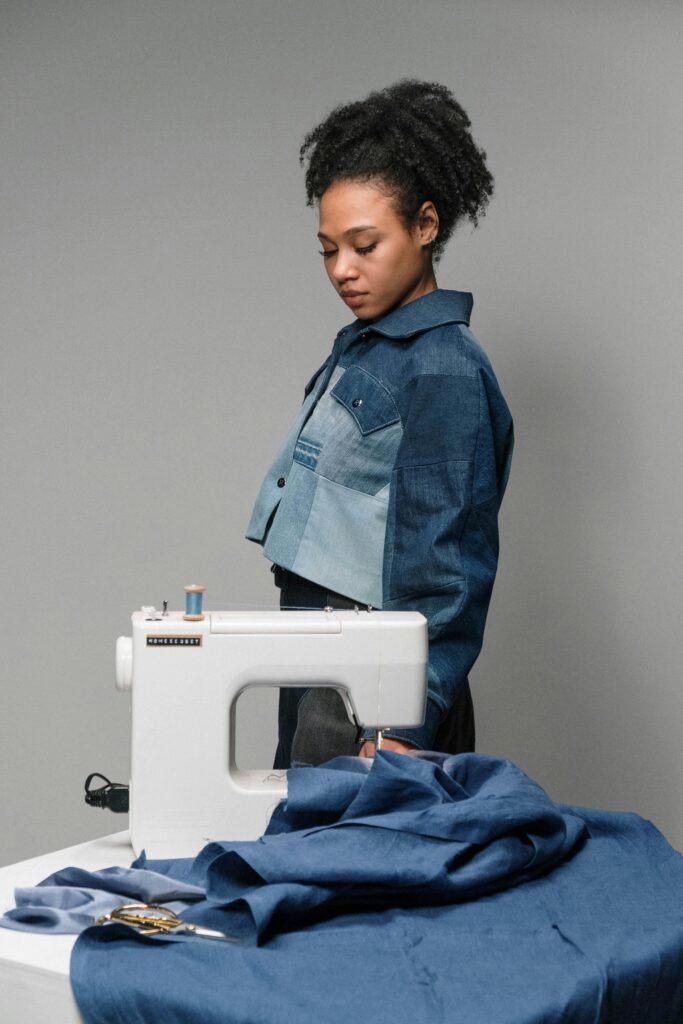

In early 2026, the textile industry is undergoing its most radical transformation since the Industrial Revolution. Driven by stringent EU regulations (like the 2025 Digital Product Passport) and a global push toward “Circular Bio-economies,” sustainability innovation is no longer a corporate social responsibility (CSR) footnote—it is the core of the business model.
This systematic review synthesizes the primary pillars of innovation currently redefining the industry.
🔬 1. Material Innovation: The Rise of Bio-Synthetics
The industry is moving away from virgin polyester (petroleum-based) toward materials that are either infinitely recyclable or naturally biodegradable.
- Next-Gen Cellulosics: Innovations in “Closed-Loop” lyocell production use non-toxic solvents to turn wood pulp or agricultural waste into high-performance fibers.
- Mycelium & Lab-Grown Leather: 2025 marked a tipping point for mushroom-based leathers. Companies are now scaling the use of Mycelium (fungal root structures) to create durable, carbon-negative alternatives to animal hide.
- Protein-Based Fibers: Researchers are successfully “brewing” silk and wool-like fibers using yeast fermentation, eliminating the need for land-intensive livestock.
🔄 2. Circularity and End-of-Life Engineering
The “Take-Make-Waste” model is being replaced by technical and biological nutrient loops.
- Chemical Recycling: Unlike mechanical recycling (which shortens fibers), new chemical processes break down blended fabrics (e.g., poly-cotton blends) into their original molecular building blocks, allowing for infinite recycling without loss of quality.
- Design for Disassembly: Brands are now using “smart threads” that dissolve at specific temperatures, allowing zippers and buttons to be easily removed so the base fabric can be recycled.
- Digital Product Passports (DPP): Every garment now contains a scannable QR or RFID tag that tracks its material composition, origin, and repair history, facilitating more efficient sorting in recycling facilities.
💧 3. Resource Efficiency in Manufacturing
Traditional textile dyeing is one of the most water-pollutive processes on Earth. Innovation here focuses on “Dry” technologies.
- CO2 Dyeing: Using supercritical carbon dioxide instead of water to carry dye into fibers, reducing water consumption by 100% and energy use by 50%.
- Microbial Pigments: Labs are engineering bacteria to “grow” colors directly onto fabric. This eliminates toxic fixatives and heavy metals from the wastewater stream.
- AI-Driven Pattern Making: Artificial Intelligence is now used to arrange patterns on fabric to ensure zero-waste cutting, reducing fabric scrap by up to 30% before the garment is even sewn.
📊 Innovation Impact Matrix (2026)
| Innovation Pillar | Primary Impact | Scalability (2026) |
| Bio-based Synthetics | Decarbonization | Moderate (Scaling rapidly) |
| Chemical Recycling | Circularity / Waste Reduction | High (Industrial integration) |
| Waterless Dyeing | Pollution / Resource Scarcity | Moderate (High CAPEX cost) |
| Blockchain Traceability | Transparency / Ethics | Very High (Regulatory requirement) |
📈 4. The Economic Shift: “Textiles-as-a-Service”
Sustainability innovation is not just technical; it’s structural. We are seeing a shift from ownership to usership.
- Resale & Rental Integration: Major retailers now host their own “pre-loved” sections, capturing the secondary market value of their products.
- Repair-Ability: To comply with new “Right to Repair” laws, brands are providing lifetime repair services or modular garment designs that allow consumers to replace worn-out sections.
2026 Systematic Conclusion: The industry has moved from “Efficiency” (doing less harm) to “Regeneration” (doing active good). The winners in this new landscape are those who treat textile waste as a renewable feedstock rather than a liability.